Why Did I Have Blue Eyes When I Was a Baby
The Globe'due south Population By Eye Color
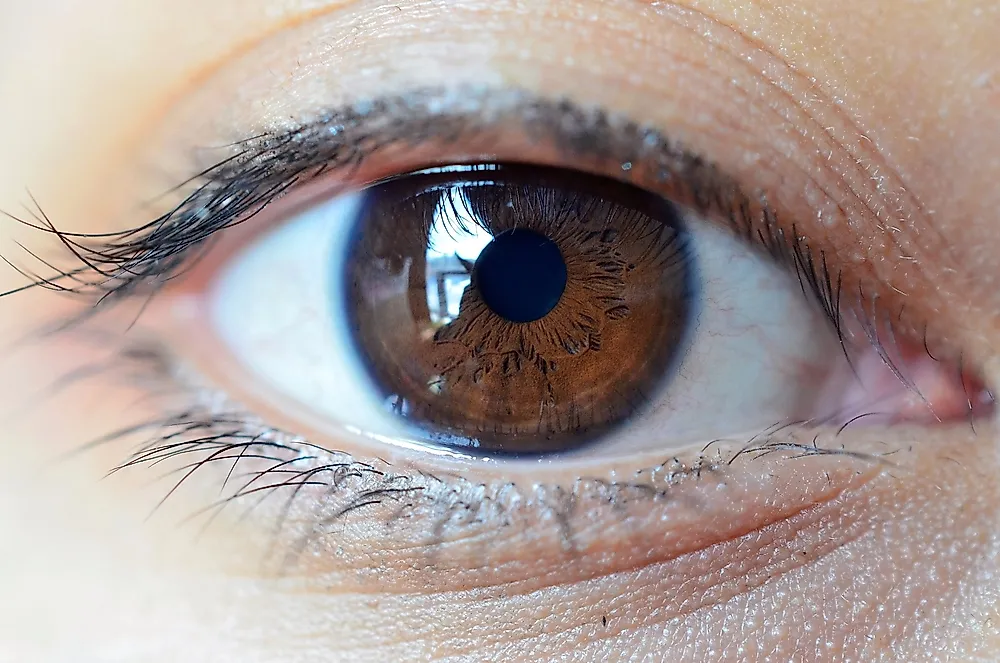
- The vast majority of the globe'due south population has brownish eyes, with blue coming in a very afar second.
- While simply two% of the world has light-green eyes and nigh ten% accept blueish optics, 86% of people in Republic of ireland and Scotland have 1 of these 2 colors.
- Albinos have blood-red eyes because of their lack of pigmentation in the eye exposes the blood vessels underneath.
Some say your eyes are the windows to your soul. Are you filled with regret, joy, or sadness? Is your soul troubled or bursting with triumph? Your optics will reveal it all if someone has the chance to look in them, many believe. What is not discussed as much is why our optics' colour tin can vary and so much, from where our colors originate and how they came to be. Why does she have eyes the colour of chocolate, yet his eyes seem to reflect the sea? From brown to green and "heterochromia," the world'due south eyeballs reflect our vastly varied genetic landscape.
Brown - 70% to 79%
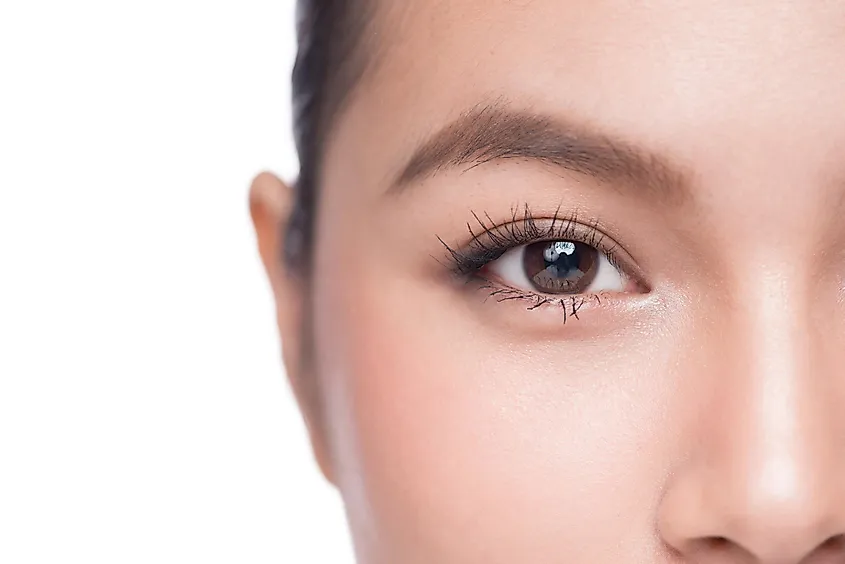
You lot may have already noticed this fact: a bulk of the world'southward population has brown eyes. In fact, somewhere between lxx% and about lxxx% of people have brown eyes, making chocolate-brown the most common eye colour globally.
If you accept brown optics, it is likely because at to the lowest degree ane of your parents does. Eye color is partially genetic, and the genes for brownish eyes are thought to be dominant. This means that if one of your parents has an center colour other than brown, but 1 has chocolate-brown eyes, you lot too will have dark-brown eyes.
Your eye colour is as well determined past the way your iris scatters light as information technology passes through it, chosen Rayleigh scattering, and the corporeality of melanin in your skin. Melanin is a skin pigmentation produced by your torso. The more melanin y'all have, the darker your eyes will be.
Blue - 8% to 10%
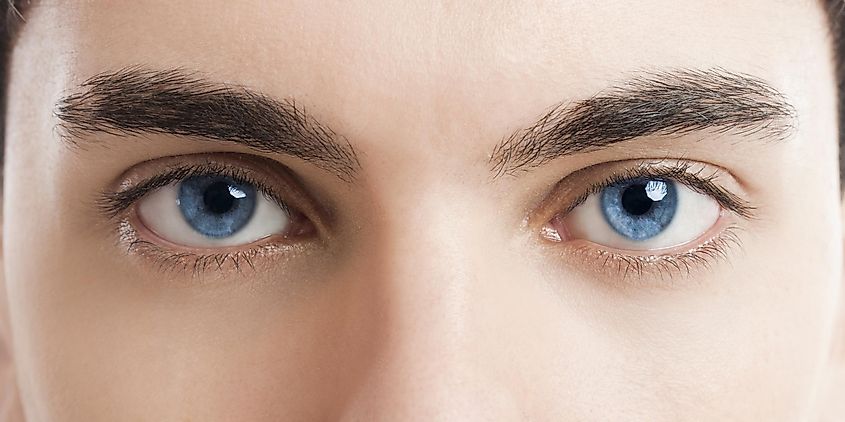
Bluish is the 2d most common type of centre color on Earth in humans. Only betwixt eight% and ten% of humans can boast having blueish eyes, however. Interestingly, a genetic mutation thought to take occurred between 6,000 and ten,000 years ago is the origin of this center color. The mutation resulted in a "switch" that turned off the genetic machinery for brown eyes.
If you take bluish eyes and meet someone else who does, y'all are said to share something else between you: one ancient, common antecedent.
Hazel - 5%
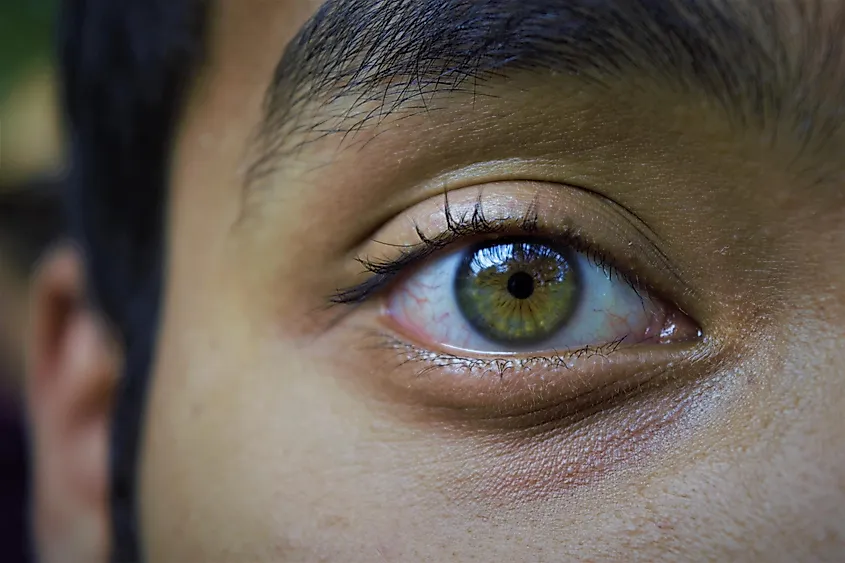
If you take hazel eyes, you have a combination of colors at play in your iris. These eyes are a mixture of green and orangish or gold, almost similar a cat's optics. While just near anyone can have this colour, it occurs nigh commonly in N Africa, the Center E, Brazil, and in people of Spanish ancestry.
Amber - 5%
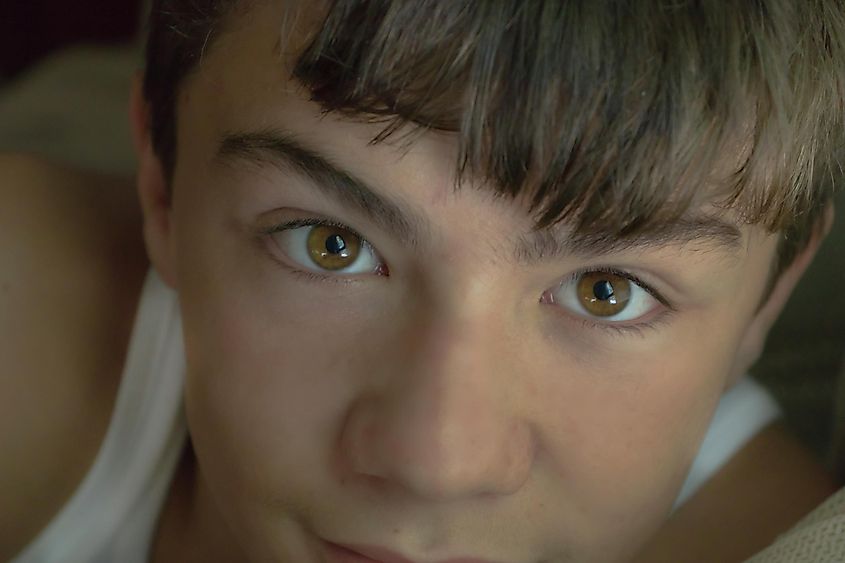
Similar hazel eyes, only about five% of the earth'south population has amber-colored optics. This eye color is a light brownish, sometimes rusty. People of Asian, Spanish, South American, and Due south African descent are more than likely to have amber eyes.
Grayness - 3%
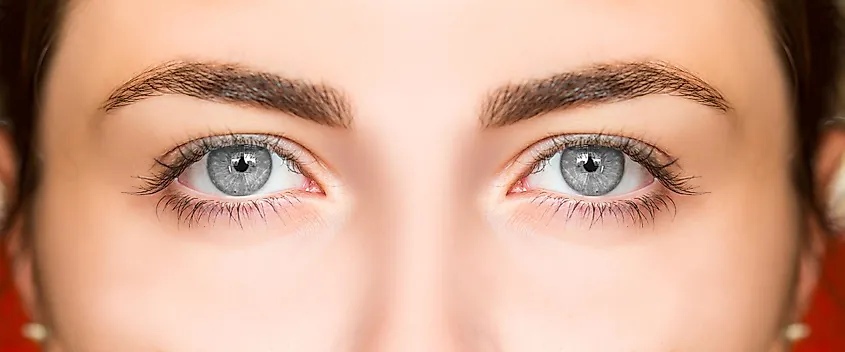
Yes, some people really have eyes the color of your cat. People with grey eyes take irises that do not comprise whatsoever melanin, and actress amounts of collagen in the eye called the stroma. This blocks blueish coloring from surfacing in their eyes, resulting in a steely gray hue.
Green - 2%

Beckoning like glimmering emeralds, greenish eyes are some of the rarest in the world. Despite this, some areas accept a huge concentration of green-eyed people. While rare elsewhere, greenish and blue-eyed people are so common in Ireland and Scotland that over 86% of the population has them. People are not built-in with green eyes, however, but abound into them. All babies are born with either blueish or brown eyes, and they can develop green eyes by nigh 6 months sometime.
Greenish eyes are formed by a combination of light-brown and yellowish pigmentation, combined with Rayleigh handful. Outside of Republic of ireland and Scotland, people with green eyes live by and large in Northern Europe.
Red/Violet - <one%

It may be shocking to run into red and violet in a list of heart colors for humans, but it happens in rare cases. Less than 1% of the globe'southward population actually accept red or violet optics. A person tin can appear to have violet eyes when they lack pigmentation in their eyes, and light reflects off their claret vessels. People with red eyes are typically albinos. The lack of pigmentation in their skin causes the blood vessels to announced, giving them red optics.
Heterochromia - <1%
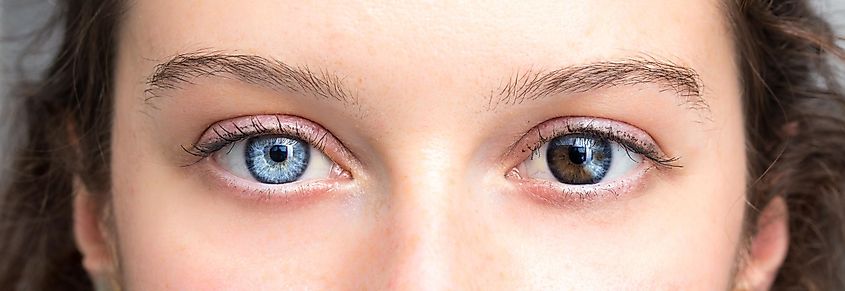
What the heck is heterochromia? This term refers to people who have eyes of two different colors. Some people have two colors within both optics, and others take a different color for each eyeball. "Heteros" in Greek means different, and "chroma" means colour. Unfortunately, this centre color tin can be linked with specific conditions such every bit Bourneville affliction, Bloch-Sulzberger syndrome, and Recklinghausen affliction.
While your natural eye color is non something yous tin choose, information technology is very of import. The color of your eyes, similar the colour of your skin, is determined past nature best to protect yous from the sun's UV rays. In theory, the darker your eyes are, the less harm the sun does to them on a brilliant day. Most all babies are born with blueish optics, but this changes to brown for most people in the beginning few years of life. It is as well truthful that your optics may change as you lot age if you develop a disease that does so, or you lot experience another form of trauma that could influence your heart color. In short, middle colour tin be a fascinating topic that tells the story of your ancestry. Whether your optics are brownish, blue, green, red, or someplace in between, they will e'er be beautiful in the eyes of the beholder.
The Earth'due south Population By Centre Color
| Rank | Eye Color | Estimated Pct of World Population |
|---|---|---|
| ane | Chocolate-brown | seventy% to 79% |
| 2 | Blueish | eight% to 10% |
| 3 | Hazel | v% |
| iv | Amber | 5% |
| five | Gray | 3% |
| 6 | Dark-green | 2% |
| 7 | Reddish/Violet | <1% |
| 8 | Heterochromia | <1% |
Source: https://www.worldatlas.com/articles/which-eye-color-is-the-most-common-in-the-world.html

Post a Comment for "Why Did I Have Blue Eyes When I Was a Baby"